
Swiss chard is a nutrient-rich vegetable enjoyed worldwide under various names. Packed with vitamin K and nitrates, it's an excellent choice for lowering high blood pressure and reducing the risk of obesity, diabetes, and heart disease. Swiss chard offers numerous health benefits, including improved skin health, increased energy levels, and protection against cancer and osteoporosis. Additionally, it contains moderate amounts of thiamin, niacin, vitamin B6, calcium, phosphorus, zinc, and selenium, as well as antioxidants and beta-carotene that support overall health. It is recommended for pregnant women to treat anemia and is beneficial for sexual health.
Learn how to store chard and make the most of its benefits in cooking.
Ways to Store Chard:
- Proper Selection: When buying chard, choose dark green, flexible leaves and avoid wilted or yellowed ones. Make sure the stems are firm and not discolored.
- Quick Cleaning: After purchasing, rinse the chard thoroughly under running water to remove any dirt or debris. Avoid soaking it for long periods, as this can deplete its nutritional content.
- Drying: After washing, pat the chard dry with a clean paper towel or spin it dry in a salad spinner to remove excess moisture.
1. Refrigeration:
Method:
- Wash the chard leaves thoroughly and let them dry completely.
- Wrap the chard in slightly damp paper towels.
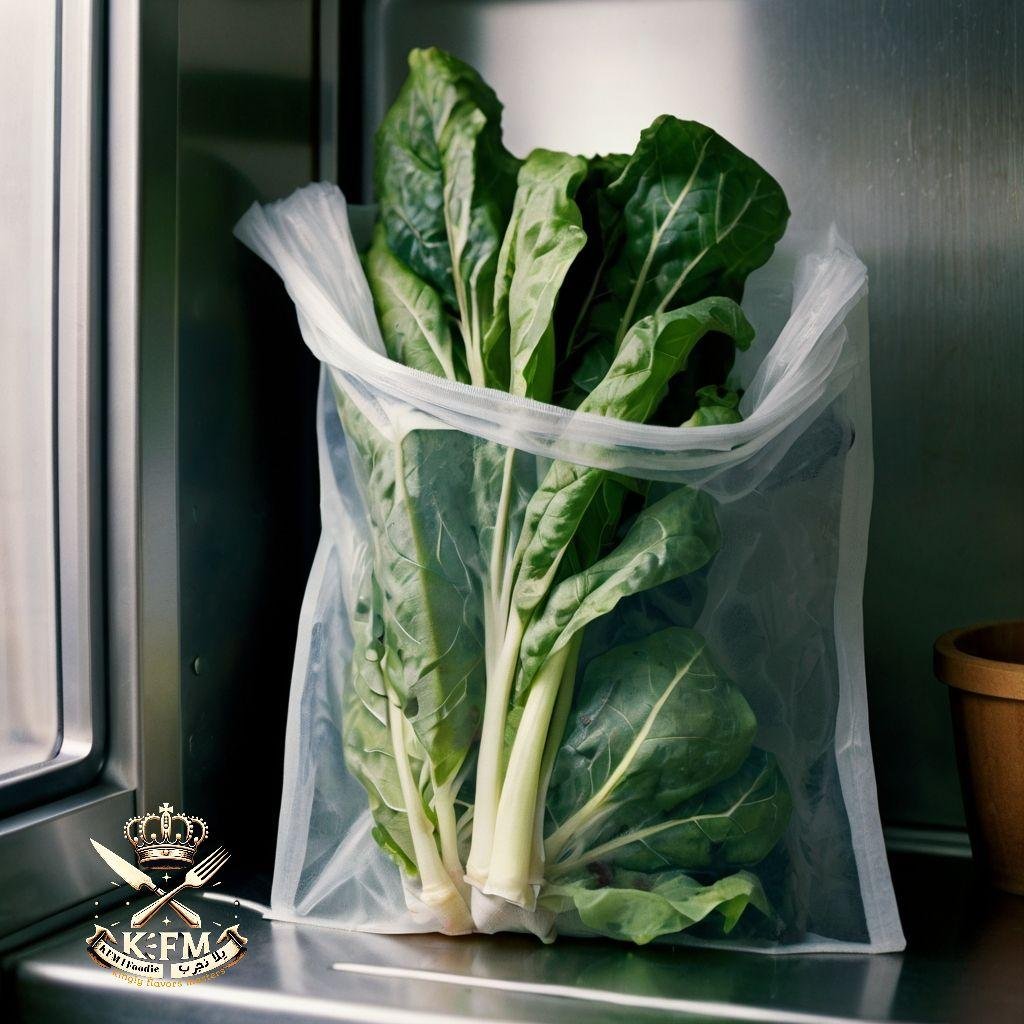
- Place the wrapped leaves in a sealed plastic bag.
- Store it in the vegetable drawer of the refrigerator.
Storage Duration:
- Chard can be kept fresh in the refrigerator for up to 1-2 weeks.
2. Freezing:
Method for Blanched Chard:
- Wash the chard and chop it into small pieces.
- Submerge the chard in boiling water for 2 minutes, then quickly transfer it to cold water to stop the cooking process.
- Dry the chard thoroughly, then divide it into portions and place in airtight freezer bags.
- Be sure to remove any excess air before sealing.
- Place the bags in the freezer.
Storage Duration:
- Frozen chard can be stored for up to 6-8 months.
3. Drying:
Method:
- Wash the chard and let it dry completely.
- Spread the leaves out on a drying tray or mesh rack.
- Place the tray in a dry, dark, and well-ventilated area.
- Leave the leaves until they are fully dried, then store them in an airtight glass container.
Storage Duration:
- Dried chard can be stored for up to 1-2 years.
Reasons for Rapid Spoilage of Chard:
- Heat and Humidity: Exposure to heat and humidity promotes the growth of bacteria and fungi, accelerating spoilage.
- Exposure to Air: When chard is exposed to air, it loses moisture, which can alter its color and taste.
- Physical Damage: Any mechanical damage to the leaves allows bacteria and fungi to enter, speeding up the spoilage process.
Chard: A Green Treasure in Your Kitchen
1. Health Benefits of Chard:
2. Nutritional Value of Chard:
The nutritional content of chard can vary slightly depending on its type and growing conditions. However, it is generally an excellent source of essential nutrients that support overall health.
Qui devrait et ne devrait pas manger du bette ?
Convient à :
La plupart des personnes en bonne santé peuvent consommer du bette dans le cadre d'une alimentation équilibrée en raison de sa forte teneur en nutriments.
Ne convient pas à :
Les personnes souffrant de calculs rénaux devraient consommer le bette avec modération, car il contient des oxalates, qui peuvent contribuer à la formation de calculs.
4. Utilisations historiques du bette :
Le bette est utilisé depuis des milliers d'années et était considéré comme un aliment de base dans de nombreuses civilisations anciennes. Il était également couramment utilisé dans la médecine traditionnelle pour traiter diverses affections.
5. Utilisations du bette en cuisine :
Le bette est utilisé dans une variété de plats à travers le monde et peut être préparé de différentes manières, telles que :
- Ébullition : La méthode la plus courante pour cuisiner le bette, où il est blanchi dans de l'eau bouillante puis servi en accompagnement ou ajouté aux salades.
- Grillage : Les feuilles de bette peuvent être grillées avec un peu d'huile et des épices pour obtenir une saveur fumée.
- Friture : Faire frire les feuilles de bette avec de l'ail et des oignons crée un délicieux plat d'accompagnement.
- Farce : Les feuilles de bette peuvent être utilisées pour farcir des tartes ou des plats farcis.
6. Différentes recettes utilisant du bette :
- Salade de bette : Un mélange rafraîchissant de bette frais avec du concombre, des tomates et des oignons.
- Soupe de bette : Une soupe chaude et nourrissante avec la saveur riche du bette et de la crème.
- Tarte au bette : Une tarte légère et délicieuse farcie de bette et de fromage.
- Feuilles de vigne farcies au bette : Un plat traditionnel arabe où des feuilles de vigne sont farcies de bette et de riz.
- Bette grillé au citron et à l'ail : Un plat d'accompagnement sain et savoureux.
Conseils pour garder le bette frais :
- Stockage : Conservez le bette dans le réfrigérateur, dans un sac plastique perforé.
- Nettoyage : Lavez bien le bette avant de l'utiliser.
- Découpe : Ne coupez le bette qu'avant de l'utiliser.
- Utilisation : Le bette peut être utilisé directement sans décongélation.
En suivant ces conseils, vous pouvez maintenir la fraîcheur du bette plus longtemps et profiter de ses bienfaits pour la santé.
Conclusion :
Le bette est un aliment de base dans de nombreuses cuisines du monde, connu pour sa valeur nutritionnelle élevée et sa saveur unique. N'hésitez pas à essayer de nouvelles recettes avec du bette et à explorer des saveurs mondiales dans un seul plat.


